
Vibe coding: human-led, AI-accelerated
Professional software engineering can use AI for speed without surrendering human direction and responsibility.
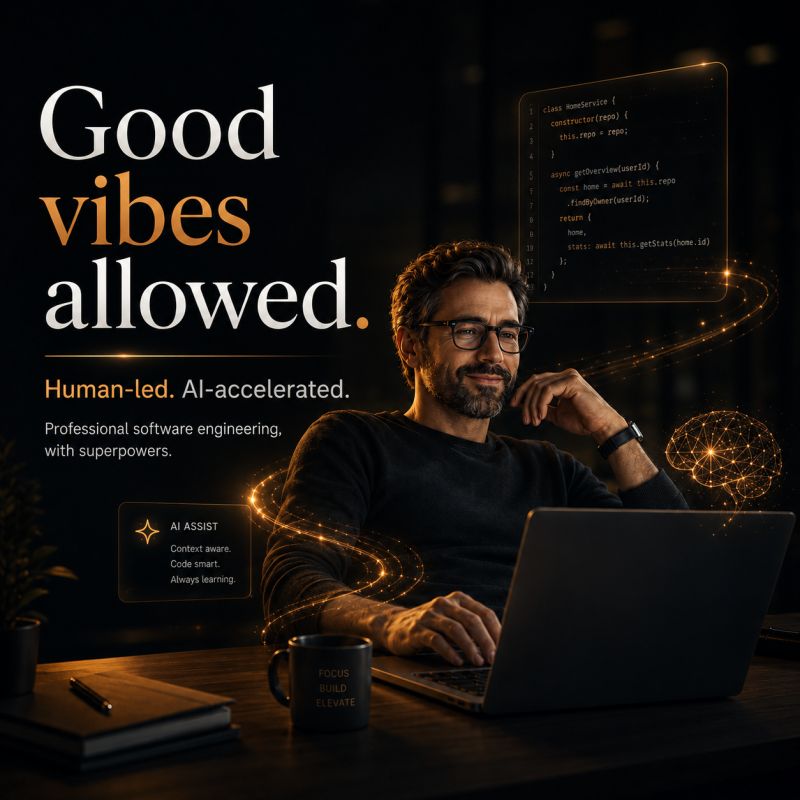
“Vibe coding” gets a bad reputation because it is often used to describe accepting whatever an AI produces without understanding the system. That is not the only way to work with AI.
After more than twenty years in software, I do not leave my experience at the door when I use an agent. Architecture judgment, product instinct, debugging skill, taste, pattern recognition, and refactoring discipline remain active throughout the work.
Not every line, still in the loop
I may not manually review every generated line in the same way I would review a small human-written patch. The scale and speed of generation make that model incomplete. But I am still responsible for the system.
I define the direction and constraints. I inspect architecture and behavior. I test the product. I challenge suspicious choices. I refactor when the shape is wrong. I decide what is ready to ship.
The review surface shifts from “did I personally type this?” to “do I understand and trust what this system does?”
AI speed, human direction
The strongest workflow is neither fully manual nor blindly autonomous. AI contributes speed, breadth, and relentless implementation energy. The human contributes intent, judgment, context, and accountability.
Used this way, vibe coding is not the abandonment of professional engineering. It is professional engineering with new leverage.
Good vibes are allowed. So are standards. The combination is where the superpower lives.
Adapted from a post originally published on LinkedIn.